
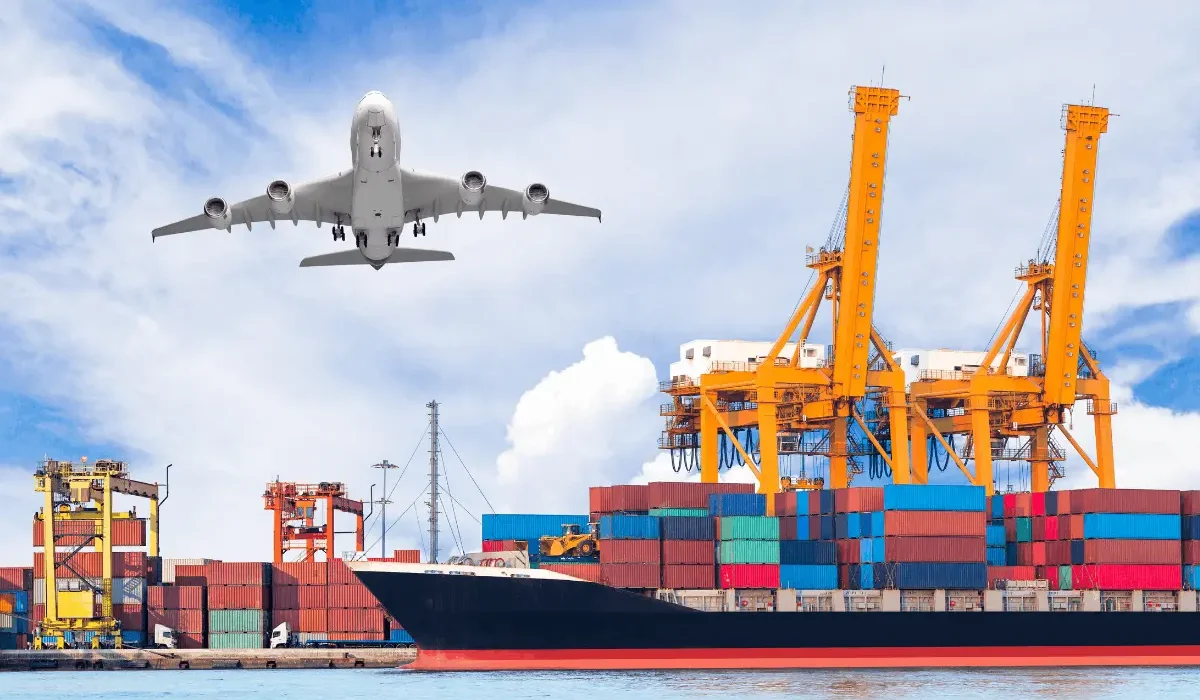
Choosing a freight option is often treated as a logistics decision. For businesses importing commodities and industrial materials, it is actually a commercial decision.
The wrong freight model can increase landed cost, tie up working capital or create unnecessary delays. The right choice depends on cargo volume, urgency, value, handling requirements and inventory strategy.
FCL vs LCL: volume changes the economics
FCL, or Full Container Load, is generally used when cargo volumes justify an entire container. The shipper effectively pays for the container capacity and benefits from fewer consolidation and deconsolidation touches.
LCL, or Less than Container Load, allows smaller shipments to share container space with cargo from other shippers. Charges are generally based on the space used rather than the entire container.
For smaller shipments, LCL can avoid the need to wait until enough cargo is available to fill a container. But it can involve additional handling and consolidation steps.
FCL, meanwhile, can become more economical as cargo volume increases and may offer operational advantages for sensitive or higher-volume shipments.
Ocean vs Air: speed has a price
Ocean freight is generally the natural choice for bulky, heavy or comparatively lower-value cargo where cost efficiency matters more than speed.
Air freight plays a different role. It becomes attractive when lead time is commercially critical, when shipment volumes are small, or when the value or urgency of the cargo justifies the higher freight cost.
The decision should therefore be based on the cost of delay, not simply the cost of transportation.
The real calculation is landed cost
Suppose air freight costs significantly more but enables a production line to remain operational. The higher freight cost may be justified.
Likewise, shipping a low-margin commodity by air simply to save a few days may destroy the economics of the transaction.
The smartest freight decision considers:
Product value + shipment volume + urgency + inventory cost + risk of delay + freight cost
This is why freight planning should ideally begin at the sourcing stage rather than after the purchase order is confirmed.
Kalpataru Global’s approach combines cross-trade capability with knowledge of ports, transport corridors, logistics constraints and supply modelling—allowing the sourcing decision and logistics decision to work together rather than in isolation.
The best freight option is not necessarily the fastest or the cheapest. It is the one that creates the best commercial outcome for the shipment.

0 Comments